Yoga Nidra for Stress Relief: A 7-Day Beginner Plan
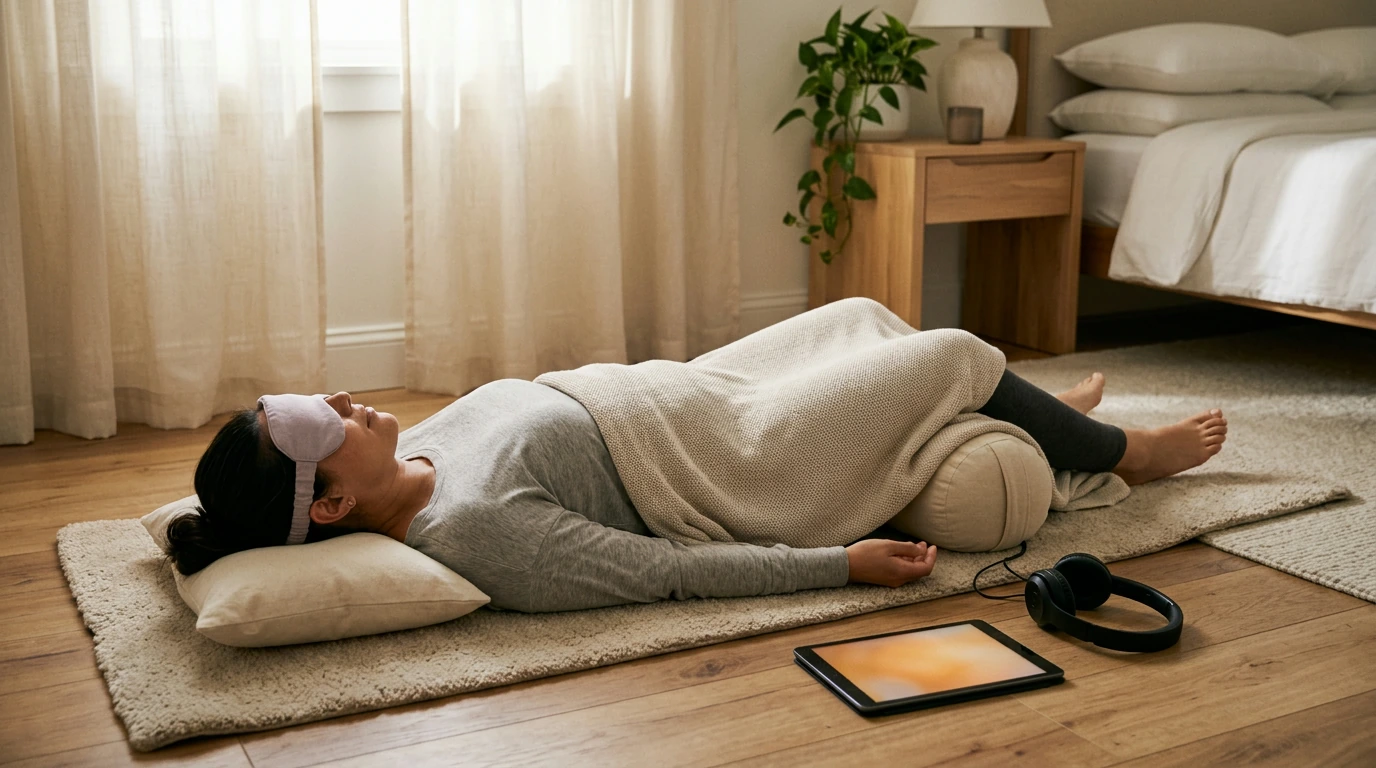
A Simple Path to Stress Relief Through Yoga Nidra
Yoga nidra is a guided practice designed to bring the body into deep rest while the mind stays gently aware. For beginners, it can feel like a clear, step-by-step reset—useful during high-stress seasons, overstimulation, or when sleep support is needed. With the right setup and a realistic routine, it’s one of the simplest ways to practice deep relaxation without needing flexibility, prior yoga experience, or extra effort.
What Yoga Nidra Is (and Why It Feels So Restorative)
Yoga nidra is often called “yogic sleep,” but it’s less about forcing sleep and more about allowing the nervous system to downshift. Most sessions are practiced lying down while following a structured sequence of attention and relaxation.
- Effort stays low: the focus is on receiving guidance rather than “doing it right.”
- The structure does the work: many sessions move through body sensing, breath awareness, guided imagery, and a gradual transition back to alertness.
- Consistency matters: beginners often notice changes when they practice regularly, even with short sessions.
For a broader overview of meditation benefits and safety considerations, the National Center for Complementary and Integrative Health offers a helpful summary here: NCCIH: Meditation and Mindfulness—What You Need To Know.
Common Stress Patterns Yoga Nidra Can Help Unwind
Stress often shows up in predictable loops: mental chatter, body bracing, emotional depletion, and that “wired but tired” feeling. Yoga nidra doesn’t erase life’s demands, but it can help interrupt these patterns long enough for the body to recover.
- Racing thoughts at bedtime: guided attention can reduce mental looping and support smoother sleep onset.
- Body tension that doesn’t switch off: systematic relaxation helps soften common holding zones like jaw, shoulders, belly, and hips.
- Overwhelm and emotional fatigue: deep rest can feel like a pause that restores patience and capacity.
- Energy crashes: a short session can provide rest without the grogginess some people feel after naps.
Johns Hopkins also discusses meditation’s relationship to stress reduction and overall well-being: Meditation for Stress (Johns Hopkins Medicine).
Getting Started: Setup That Makes It Easier to Stick With
The most “effective” practice is the one you’ll actually repeat. A simple environment lowers friction and helps the body settle faster.
- Choose a supportive position: lie on your back with a pillow under the knees, or switch to side-lying if your back feels sensitive.
- Add warmth and comfort: a blanket, socks, and a small pillow under the head reduce fidgeting and temperature dips.
- Lower stimulation: dim the lights, silence notifications, and consider a soft eye covering.
- Pick a realistic duration: 10–20 minutes is enough for beginners; longer sessions can come later.
- Use a simple intention: one calming phrase or feeling (comfort, steadiness, ease) is plenty.
Helpful tools for a calmer practice space
If listening to guided audio helps you settle more quickly, consider pairing your sessions with comfortable, clear sound and minimal distraction. These in-stock options can support an easy routine:
- A Simple Path to Stress Relief Through Yoga Nidra (Instant Digital Download eBook) for beginner-friendly structure and repeatable routines.
- HiFi Dynamic Driver Earbuds for listening to guided practices without needing to play audio out loud.
- Natural Marble Tissue Box with Gold Accents to keep your bedside or relaxation corner feeling tidy and ready (small comforts can reduce “one more thing” stress).
A Beginner-Friendly Flow of a Typical Yoga Nidra Session
Most yoga nidra practices follow a familiar arc. Knowing the basic flow can make it easier to relax because you’re not wondering what’s next.
- Arrival: settle into stillness and notice contact points (heels, calves, hips, shoulders, head).
- Breath awareness: observe natural breathing without changing it; allow the exhale to lengthen naturally.
- Body scan: move attention through the body region by region to invite softening and heaviness.
- Opposites: briefly sense paired sensations (heavy/light, warm/cool) to quiet mental chatter.
- Imagery: simple scenes (sky, ocean, soft light) to deepen ease without overthinking.
- Return: small movements, fuller breaths, and a slow transition back to sitting or standing.
A Simple 7-Day Starter Plan (Short, Repeatable, Beginner-Safe)
| Day | Duration | Focus | Tip for Success |
|---|---|---|---|
| 1 | 10 min | Comfort + breathing | Prioritize warmth and knee support |
| 2 | 12 min | Basic body scan | Relax the jaw and tongue early |
| 3 | 15 min | Body scan + exhale length | Let shoulders feel heavy |
| 4 | 15 min | Opposites (heavy/light) | Stay curious; no need to “feel strongly” |
| 5 | 18 min | Imagery | If imagery is hard, return to breath |
| 6 | 20 min | Longer stillness | If restless, soften the belly |
| 7 | 20 min | Full flow review | End slowly; avoid jumping into tasks |
What’s Included in the Digital eBook and How to Use It
For anyone who wants a clear, repeatable approach, A Simple Path to Stress Relief Through Yoga Nidra (Instant Digital Download eBook) is designed to remove guesswork and help beginners stay consistent.
Comfort and Safety Notes (Especially for Beginners)
For those interested in the growing research landscape, you can browse published studies and abstracts here: PubMed listings on yoga nidra.
FAQ
How long should a beginner practice yoga nidra for stress relief?
Start with 10–20 minutes and aim for consistency rather than longer sessions. If it feels supportive, increase gradually over time. Falling asleep can still be beneficial because deep rest is a core goal.
Is it normal to fall asleep during yoga nidra?
Yes—many beginners drift off, especially when stressed or sleep-deprived. With repetition, awareness often improves naturally. If you want to stay awake, practice earlier in the day or sit slightly elevated.
Can yoga nidra help with nighttime stress and racing thoughts?
It can help by giving the mind a gentle structure to follow and by relaxing tension through body scanning and breath awareness. Keep it short before bed, and transition slowly afterward so your nervous system stays calm.











Leave a comment