Peppermint Oil for Skin: Safe Dilution, Recipes & Tracker
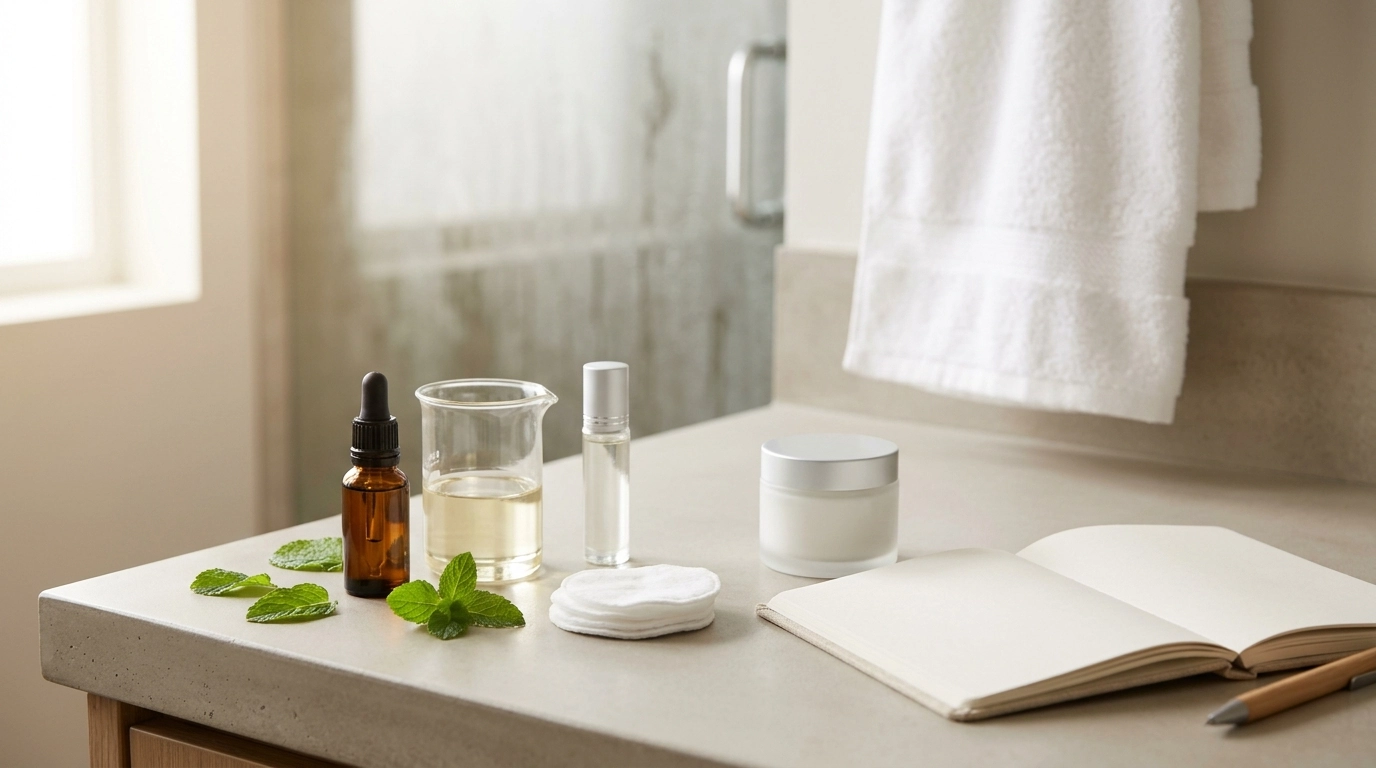
Peppermint Oil for Clear, Comfortable Skin: Recipes, Tips, and a Simple Tracker
Peppermint essential oil can feel instantly refreshing on skin, but it also demands careful dilution and smart routine planning. Used thoughtfully, it can be a nice “supporting player” for comfort—especially after heat, workouts, or mask-wearing—while helping you avoid the trap of over-scrubbing. The key is keeping your skin barrier protected: start low, patch test, and track changes so you can tell the difference between “cooling” and “irritating.”
What Peppermint Oil Can (and Can’t) Do for Skin
Peppermint oil is known for its brisk, cooling feel (largely from menthol). That sensation can make skin feel calmer after sweating or friction, and the fresh “tingle” can reduce the urge to keep touching a bothersome area. For oily-feeling skin, it may work as an occasional add-on when properly diluted and paired with a gentle cleanser and moisturizer.
What it can’t do: it’s not a replacement for acne medications, sunscreen, or a fragrance-free moisturizer when your barrier is compromised. Overuse is a common problem—too strong, too frequent, or applied to the wrong place can trigger redness, dryness, or stinging.
Quick Suitability Guide by Skin Type
| Skin type | Best use cases | Avoid or use extra caution when |
|---|---|---|
| Oily / combination | Occasional spot-area body use; scalp or beard oil blends (well diluted) | Using undiluted; daily full-face application |
| Dry | Very limited use in a richer carrier oil on small areas | Any stinging, flaking, tightness, or active irritation |
| Sensitive / reactive | Patch-tested rinse-off products only (rare) | Rosacea-prone flushing, eczema flare, barrier damage |
| Acne-prone | Supportive add-on for body acne blends; avoid picking triggers | Inflamed, open lesions; strong leave-on facial use |
| Mature | Occasional use in nourishing carrier oils for sensory refresh | Frequent use that increases dryness or sensitivity |
Safety Basics: Dilution, Patch Testing, and When to Skip
Essential oils are highly concentrated. Peppermint oil should never be applied neat (undiluted) to skin. For leave-on use, a conservative dilution range of about 0.25%–1% is a practical place to stay—higher is not “better,” and comfort often drops fast as concentration climbs.
- Patch test first: apply a small amount of your diluted blend to the inner forearm and watch for 24–48 hours. Stop if burning, swelling, or rash occurs.
- Avoid sensitive zones: eyes, eyelids, lips, nostrils, genitals, and freshly shaved or recently exfoliated skin.
- Skip compromised skin: broken skin, active dermatitis, or areas that are already irritated.
- Be careful with strong actives: if you use retinoids, benzoyl peroxide, or AHA/BHA on an area, don’t add peppermint until tolerance is clearly established (and consider separating by time/area).
- Extra caution: pregnancy, nursing, and children should involve individualized clinician advice.
For broader safety context, see the American Academy of Dermatology’s overview on essential oils and skin use: https://www.aad.org/public/everyday-care/skin-care-basics/care/essential-oils.
How to Dilute Peppermint Oil Correctly (Simple Math)
A helpful rule of thumb: in a 10 mL roller bottle, 1% dilution is about 2 drops of essential oil; in 30 mL, 1% is about 6 drops. Drop size varies by bottle and viscosity, so treat these as approximations and stay conservative—especially for leave-on blends.
- Start low: 0.25%–0.5% is a skin-friendly starting range for leave-on use near facial-adjacent areas (neckline, jawline perimeter, etc.).
- Match the carrier to your skin: jojoba (balanced), squalane (lightweight), sweet almond (more emollient), grapeseed (lighter feel).
- If mixing into a lotion/cream: stir thoroughly, label the date, and note the estimated dilution.
Dilution Cheat Sheet (Approximate)
| Container size | 0.25% (gentle start) | 0.5% (moderate) | 1% (upper common leave-on) |
|---|---|---|---|
| 10 mL | 1 drop | 1 drop (or 2 small drops) | 2 drops |
| 30 mL | 2 drops | 3 drops | 6 drops |
| 50 mL | 3–4 drops | 5 drops | 10 drops |
Recipes: Skin-Friendly Ways to Use Peppermint Oil
If you’re curious about what creates that cooling sensation, PubChem has a straightforward overview of menthol’s properties: https://pubchem.ncbi.nlm.nih.gov/compound/Menthol.
Routine Pairing: Keeping the Skin Barrier Happy
For a broad, evidence-focused safety overview of essential oils, the NCCIH is a reliable reference: https://www.nccih.nih.gov/health/essential-oils.
A Simple Tracker That Reveals What’s Working
Storage, Shelf Life, and Quality Checks
Helpful Picks (In Stock)
- Peppermint Oil Guide to Clear, Healthy Skin | Digital Skincare Guide for All Skin Types | Peppermint Oil for Skin Recipes, Tips & Tracker (Digital guide with recipes and a tracker approach to keep routines consistent.)
- Natural Marble Tissue Box with Gold Accents (A simple upgrade for a bathroom or vanity setup—handy when you’re patch testing and wiping away products.)
- HiFi Dynamic Driver Earbuds (Useful for a “hands-off” wind-down routine so you’re less likely to pick or over-touch skin.)
FAQ
Can peppermint oil be used on the face?
Facial skin is more reactive, so it’s usually best to avoid leave-on peppermint oil on the face. If you try it, stick to very low dilution (0.25%–0.5%), patch test first, and keep it far from the eyes; stop immediately if stinging or redness develops.
How many drops of peppermint oil should be mixed with a carrier oil?
For a 10 mL bottle, about 1 drop is roughly 0.5% and 2 drops is about 1%; for 30 mL, about 3 drops is ~0.5% and 6 drops is ~1%. Starting at 0.25%–0.5% is typically more comfortable, and you should only increase if fully tolerated.
Why does peppermint oil burn or make skin red?
Burning or redness commonly means irritation from too-strong dilution, a compromised barrier, layering with strong actives, or using oil that has oxidized. Wash it off with a gentle cleanser, apply a bland moisturizer, and seek medical advice if you get swelling, hives, or symptoms that don’t settle.











Leave a comment